
Industrial Equipment & Operational Supply
Industrial Equipment Supplies for Manufacturing & Business Operations

Find industrial equipment supplies and related products to support manufacturing, maintenance, workplace safety, material handling and packaging operations.
Supply Source helps business customers discuss sourcing needs across industrial products, packaging equipment and operational supplies. Share your application, specifications, quantities and delivery requirements so the team can confirm suitable options and availability.
When evaluating equipment, consider more than the initial purchase price. Compatibility, operating conditions, maintenance, spare parts, service life and downtime risks all affect the total cost of ownership.
- CNC and metalworking-related supplies
- Pneumatic systems and maintenance consumables
- Workplace PPE and safety supplies
- Industrial storage and material handling
- Packaging equipment and shipping supplies
Not an existing customer? Reach out to us for your exclusive online access.Call 503-905-5000 or send us a request.
Manufacturing & Precision
Industrial Equipment Supplies for High-Precision Manufacturing
Manufacturing teams need equipment and consumables that match the material, tolerance, production volume and working environment. A careful sourcing process can help balance equipment capability, serviceability, durability and lifecycle cost.
Entry-Level vs. Industrial-Grade Equipment
| Consideration | Entry-level equipment | Industrial-grade equipment |
|---|---|---|
| Typical use | Light or intermittent duties, where specifications permit | Higher-duty applications, subject to model ratings |
| Selection focus | Fit for task, safe operating limits and initial budget | Duty cycle, precision, maintainability and support |
| Lifecycle review | Check consumables, service access and replacement parts | Review uptime needs, maintenance plans and total cost |
| Best next step | Compare manufacturer specifications | Confirm application, capacity and support requirements |
These are general selection criteria, not a claim that one category is always superior. Actual performance depends on the specific product and application.
CNC Machining & Heavy Fabricating Equipment
When sourcing CNC machines, high-precision lathes, metalworking tools, hydraulic presses or welding-related supplies, review material compatibility, capacity, tolerances, controls, tooling requirements and service access. Metrology tools and measurement procedures also matter when parts must meet defined dimensions.
Integrated Pneumatic Systems & Spare Parts Inventory
Air compressors, pneumatic tools, fittings, hoses and maintenance kits should be matched to pressure, flow, duty cycle and operating conditions. Identify critical spare parts and follow manufacturer maintenance instructions to help manage unplanned downtime.
Workplace Safety & Risk Management
Comprehensive Safety Supplies: Protecting Your Vital Assets
Selecting suitable PPE is part of a wider workplace safety process. Inadequate hazard controls can expose workers to injury and businesses to operational disruption or regulatory consequences. Use a documented hazard assessment and current requirements rather than relying on product descriptions alone.
Safety Equipment Selection Checklist
This checklist is a planning aid, not a substitute for a workplace hazard assessment, professional advice or applicable OSHA requirements.
Advanced Respiratory & PPE Solutions for Compliance
Respirators, chemical protective equipment, arc-flash clothing, eye protection and fall-arrest systems must be selected for the specific hazard and task. Employers should follow applicable OSHA requirements, manufacturer documentation and their site safety program. Confirm the precise product ratings and certifications before purchase; PPE alone does not guarantee compliance.
Hazard Assessment
Identify exposures and control measures before deciding which protective products are appropriate.
Product Compatibility
Check fit, ratings, material compatibility and any limits specified by the manufacturer.
Training & Inspection
Confirm user training, inspection intervals and replacement requirements for the selected equipment.
Warehouse & Material Flow
Industrial Storage & Material Handling: Maximizing Throughput
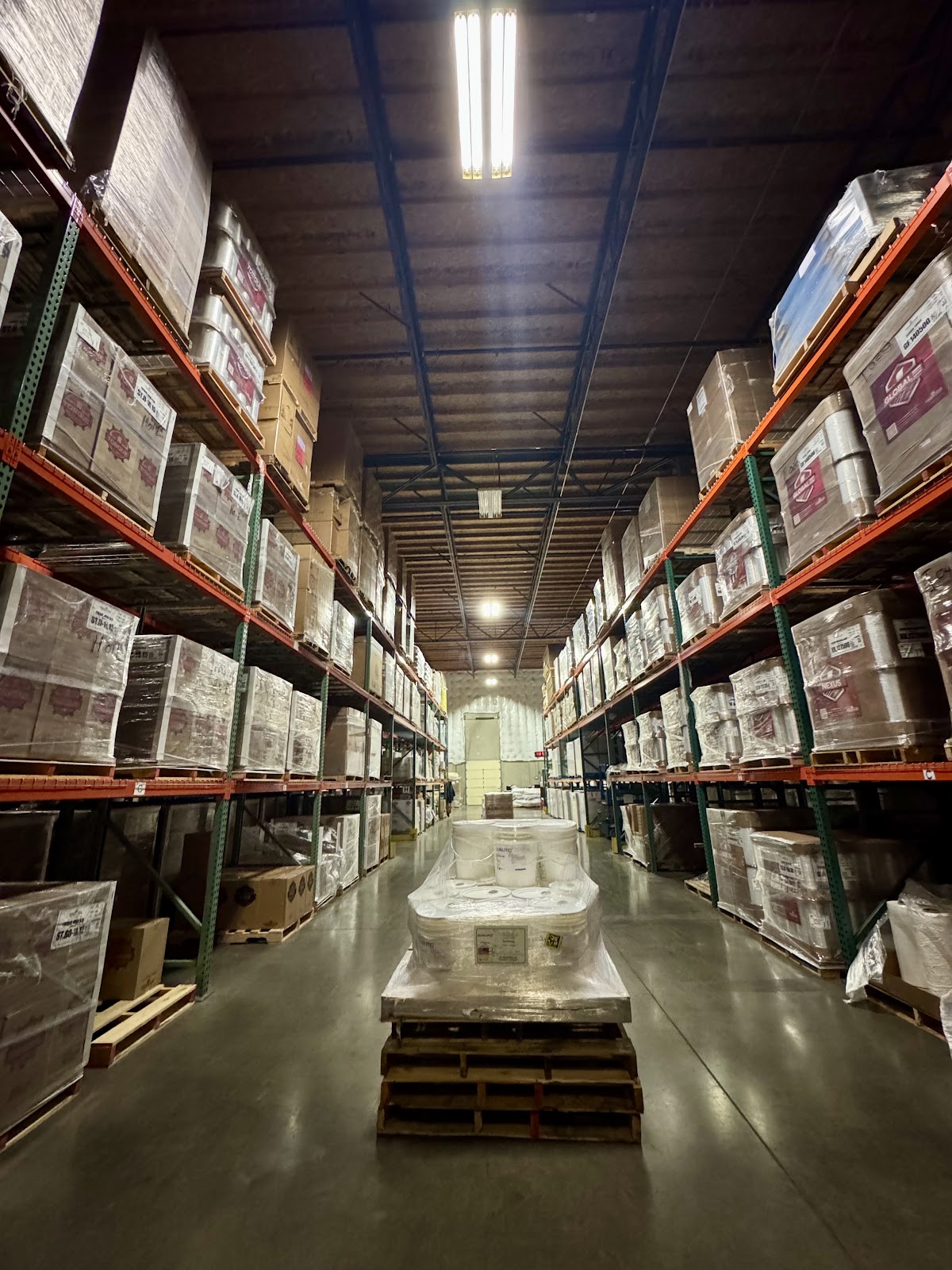
When floor space is limited, businesses can assess vertical storage, picking paths, handling equipment and movement between work areas. Any change should account for building conditions, load ratings, fire protection, access and worker safety.
Heavy-Duty Racking & Vertical Space Optimization
Review pallet racking, shelving and mezzanine options against load requirements, clearances, access, structural constraints and applicable safety rules. Have qualified professionals assess the installation.
Intelligent Robotics & AGV Integration
Automated guided vehicles (AGVs), conveyors and related systems may support material movement when routes, payloads, traffic, interfaces and safety controls are carefully planned.
Handling Equipment & Workflow
Map how pallets, components and finished goods move through receiving, storage, production and dispatch to identify bottlenecks before investing in equipment.
Warehouse Space Planning Estimator
Use this simple estimator to explore the theoretical floor area saved by moving some storage vertically. It is not an engineering design or a capacity recommendation.
Estimated footprint at 3 levels: 333 sq. ft. before aisles, access and safety clearances.
Actual layouts require professional review of rack ratings, building structure, sprinklers, access aisles and applicable codes.
Packaging & Shipping Operations
National Sourcing for Packaging Equipment & Shipping Supplies
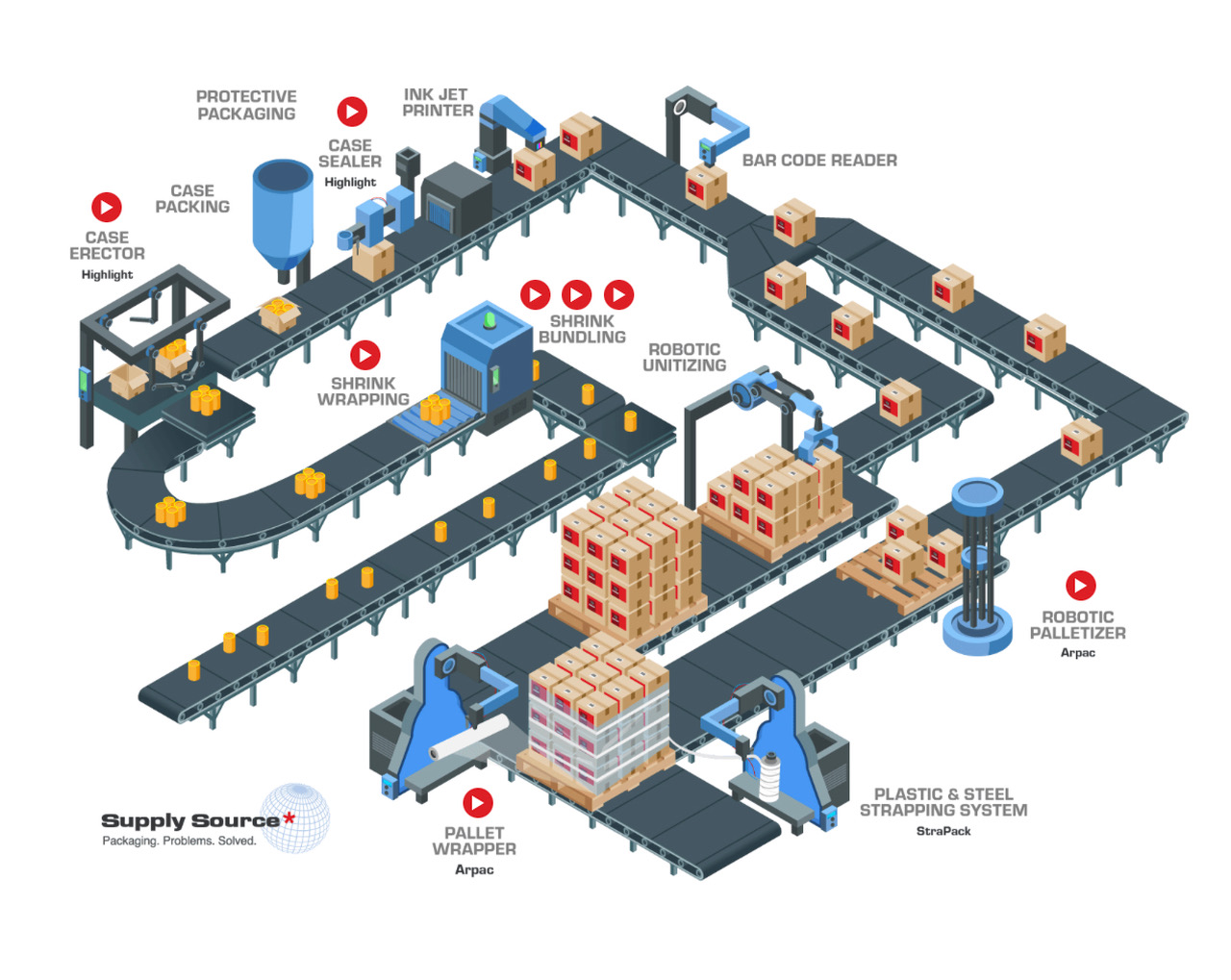
Packaging and shipping decisions influence product protection, labor requirements and fulfillment consistency. Review the product, shipment route, handling conditions and packaging process before selecting materials or automation. Confirm service area and delivery terms with Supply Source.
Automated Strapping & Pallet Stabilization Systems
Strapping machines, stretch wrap, corrugated boxes, tape and labeling products serve different packaging needs. Match the method and material to load stability, package dimensions, product fragility and handling conditions to help manage transit-damage risk.
For automated packaging, consider throughput, changeover time, operator training, maintenance access and safety guarding. For shipping scales, verify capacity, accuracy requirements and any applicable calibration or legal-for-trade obligations.
Manual vs. Automated Packaging: Cost Factors
| Cost factor | Manual process | Automated process |
|---|---|---|
| Initial investment | Often lower equipment cost | Equipment, installation and integration costs |
| Labor | Depends on staffing and package volume | May reduce repetitive handling; still needs oversight |
| Consistency | Depends on procedures and operator technique | Depends on setup, maintenance and controls |
| Ongoing costs | Materials, labor and training | Materials, maintenance, downtime and training |
No cost savings are assumed. Compare actual throughput and costs for your facility before deciding.
Supply Chain Reliability
Why Choose Supply Source for Your Industrial Equipment Supplies?
Supply Source's website describes packaging, industrial product and distribution-related offerings. A reliable procurement process starts with clear specifications, realistic lead-time expectations and confirmation of what each supplier can provide.
Requirement-Led Sourcing
Share the application, specifications and quantities so available options can be assessed against your needs.
Packaging & Supply Context
Consider equipment, packaging materials and shipping requirements together where they affect the same workflow.
Procurement Coordination
Discuss repeat-order patterns, critical items and delivery timing to support planning.
Clear Next Steps
Request confirmation of product availability, technical documentation, pricing and lead times before committing.
Customer Feedback
What Our Partners Say: Real-World Industrial Reviews
The comments below are reproduced from the supplied content brief. Confirm the original source and permission to publish before this page goes live.
“Sheri and the team are great.”
“Great vendor for Packaging Equipment and Supplies”
No AggregateRating schema is included. Review snippets for a business's own Organization or LocalBusiness are generally not eligible for Google review stars, and the supplied comments should not be represented as verified independent reviews without evidence.
Equipment & Procurement Help
Industrial Supply FAQ: Expert Insights for Peak Performance
How long should industrial equipment last?
Service life depends on the equipment type, duty cycle, operating environment, load, maintenance and how closely the manufacturer's instructions are followed. Review the manufacturer's documentation and your own maintenance records rather than relying on a general number of years.
Should we rent or buy industrial equipment?
It depends on how often and how long you need the equipment, your capital budget, maintenance responsibilities and how quickly your requirements may change. Buying may suit frequent, long-term use, while short-term or project-based needs may favor other options. Speak with your financial advisor about accounting or tax effects, and contact Supply Source to confirm which purchasing options are available.
How do we select CNC machining and metalworking equipment?
Start with the materials, part sizes, tolerances and production volumes you need to handle. Then review machine capacity, controls, tooling requirements, power and floor-space needs, operator training and service support. Confirm specifications with the manufacturer or a qualified specialist before purchasing.
How can we reduce equipment downtime?
Follow the manufacturer's maintenance schedule, train operators on correct use, and track failures to spot recurring issues. Identify critical spare parts and consumables, and plan their replenishment so they are available when needed.
What should we consider before automating packaging?
Review your current throughput, product and package variety, changeover frequency, floor space, utilities and how new equipment will connect to existing processes. Also account for operator training, maintenance access, safety guarding and total cost compared with your current manual process.
What information is needed for an industrial equipment quote?
Include product names or part numbers, specifications, quantities, the intended application, delivery location and target date. Mention any required certifications, documentation or installation needs so the team can review your request accurately.
Personalized Equipment Quote
Elevate Your Production — Request a Personalized Equipment Quote
Tell Supply Source what you need, where it will be used and when it is required. The team can review your request and confirm whether suitable products and delivery options are available.
Request an Industrial Equipment QuoteFor a faster response, include specifications, quantities, delivery location and target date.